Buying a clothesline from the dimensions on a product page can seem straightforward. If the frame fits the available area, everything should work. In reality, those measurements tell only part of the story. Washing hangs beyond the frame, doors need room to open, and somebody has to stand beside the line with a basket.
A few measurements taken before shopping can prevent an awkward purchase. Instead of asking whether a clothesline technically fits, consider whether the whole drying area will remain comfortable once it is being used.
Begin With the Space People Actually Use
Measure the proposed location, then look at what happens around it. A patio may appear large until the back door swings open. A balcony can lose considerable usable width once furniture and planters are considered.
Walk through the area as you normally would. If the clothesline will sit near a gate, storage cupboard or bin route, include that movement in your calculations.
Leaving comfortable clearance is usually more useful than filling every available centimetre with drying equipment.
Take Your Laundry Basket for a Walk
The route between the washing machine and clothesline deserves attention. Carry an empty basket to the proposed location and notice steps, tight corners and narrow doorways.
When visiting a clothesline store online or comparing different configurations, it is easy to concentrate on capacity and overlook this everyday journey. Yet a slightly smaller setup in an accessible location may prove more convenient than a larger one positioned awkwardly.
Remember that wet towels and bedding make the basket considerably heavier than it feels during this simple test.
Measure for Sheets as Well as Shirts
Clothing does not stay neatly within the dimensions of a frame. Sleeves can extend outward, while sheets and dresses need clearance underneath.
Think about the largest items washed regularly. If bedding is part of the weekly routine, check whether it can hang without touching plants, dusty paving or other objects.
Also leave enough room to move along the line while pegging clothes. A frame squeezed tightly between two boundaries may technically fit but still be unpleasant to use.
Look at Construction Alongside Dimensions
Size should narrow the shortlist, not make the entire decision. Construction, materials and intended use deserve attention too.
Someone considering an Australian made clothesline can compare available designs according to the actual location in which the product will be used. A well-constructed model still needs suitable capacity, comfortable access and an installation method that works for the property.
Check product information rather than assuming that similar-looking clotheslines are built or installed in exactly the same way.
Decide How Much Capacity You Really Need
More line length can sound like better value, but unused capacity still occupies physical space.
Count the loads produced during an ordinary week. A family regularly washing towels, uniforms and bedding may benefit from greater capacity. One or two people washing smaller loads throughout the week could find a more compact design sufficient.
The aim is to provide breathing room for normal busy days without turning an oversized clothesline into a permanent feature that restricts the yard.
Check Installation Before Delivery Day
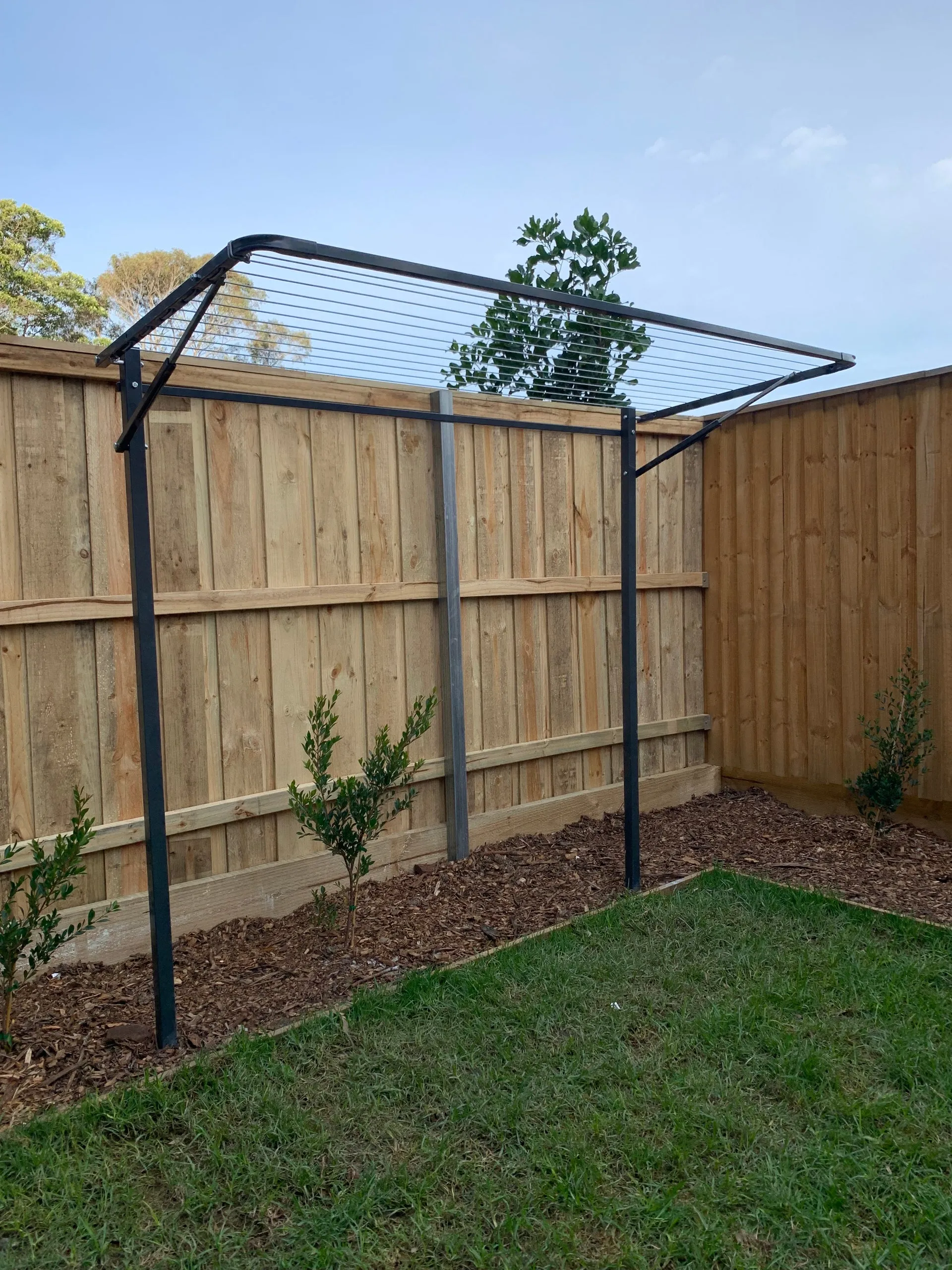
Different clotheslines have different installation requirements. Wall mounted models must be anchored to a suitable wall surface and ground supported models must be placed on a suitable base and location.
Read these requirements before ordering. If professional installation is planned, confirm what preparation may be required at the property.
This is especially important where paving, landscaping or existing structures limit possible positions. Finding out early gives you time to select another model rather than improvising after delivery.
Imagine the Area With No Washing on It
The final test has nothing to do with laundry.
Picture the clothesline sitting empty on a Sunday afternoon. Can the household still use the balcony, courtyard or backyard comfortably? Is there enough room for gardening, seating, children or pets?
If the answer is no, reconsider the size or position. Drying clothes is important, but the outdoor area still belongs to the rest of the home.
Conclusion
A tape measure can prevent more clothesline frustration than an impressive list of features. The useful measurements are not limited to width and length; they include walking space, hanging clearance, door movement, storage and the journey from the washing machine.
Before settling on a particular design, compare those measurements with the available configurations at balconyclothesline.com.au. When the numbers reflect how the space is genuinely used, the final choice has a much better chance of fitting naturally into the home.