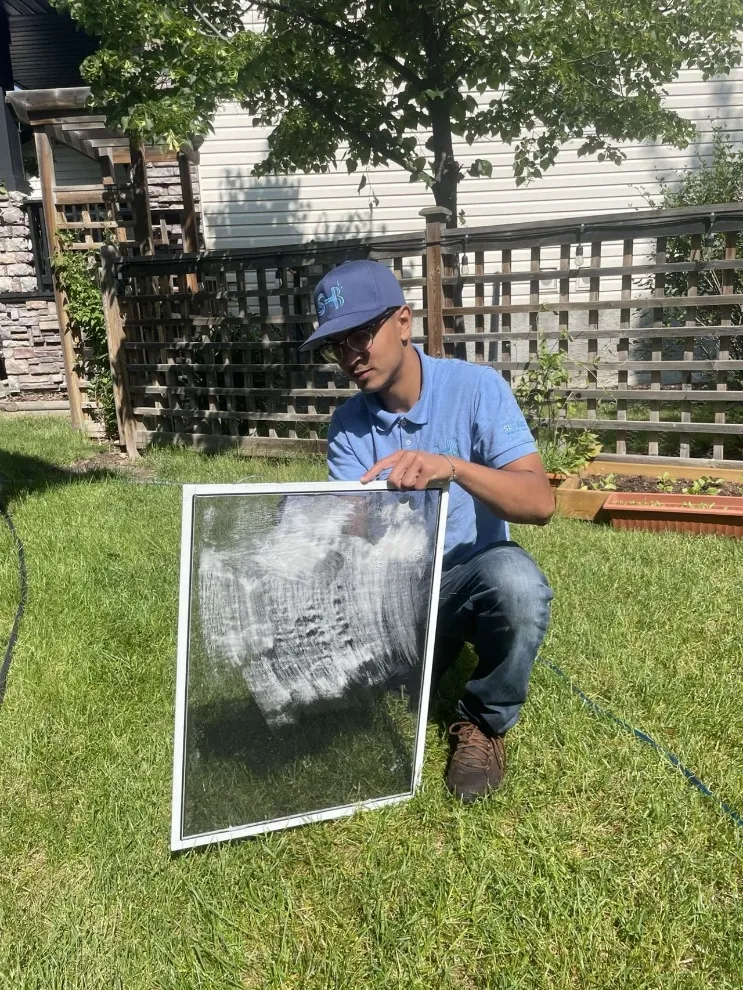
You scrub, you rinse, and the white spots are still there. Plenty of homeowners in the foothill communities of Southern California know this frustration well. The culprit is usually not dirt at all, but minerals left behind when water evaporates from glass.
What Hard Water Leaves Behind
Hard water carries dissolved calcium and magnesium. When a droplet dries on your window, the water vanishes but the minerals stay behind, forming tiny white rings that are easy to overlook at first.
Sprinklers that spray the glass and heavy morning dew both contribute. Over many months, those rings merge into a cloudy film that ordinary glass cleaner cannot lift, no matter how hard you rub.
Why the Valley Sees It So Often
Much of the San Gabriel Valley relies on groundwater that tends to run mineral-rich. Hot, dry afternoons then evaporate moisture from glass in minutes, leaving the deposits behind before anyone notices.
Windows near lawns, planters, and pool decks suffer the most because they get splashed more often. Seeing spots in those areas first is a classic warning sign that minerals are the real problem.
The Role of Window Orientation
South- and west-facing glass gets the strongest afternoon sun, which bakes mineral spots into the surface faster. Those windows often show damage first and benefit most from regular rinsing.
North-facing panes stay cooler and usually collect fewer deposits. Walking around the house and comparing each side is a simple way to spot where the problem is worst and where to focus.
How to Tell Minerals From Dirt
Rub a small area with a damp microfiber cloth. Dirt lifts away easily, while mineral deposits stay put and often feel slightly rough under a fingertip, even after a thorough wipe.
Look at the pattern as well. Circular rings and streaks beneath sprinkler paths point to water, whereas an even gray haze across the whole surface usually points to airborne dust.
Why Timing Your Rinse Matters
Minerals bond more firmly the longer they sit, so a quick rinse after a sprinkler cycle makes a bigger difference than a monthly scrub. Fresh droplets can simply be wiped away before they dry.
Early mornings and evenings are the best times, since cooler glass gives you more working time. Keep a spray bottle or hose nozzle handy so the habit takes seconds rather than minutes.
Mistakes That Make It Worse
Scraping with a metal blade, scrubbing with steel wool, or rubbing dry glass can scratch the surface. Scratches then trap even more minerals and make every future cleaning harder than the last.
Letting deposits sit for years is just as harmful. Mild buildup responds to gentle treatment, but long-neglected glass can etch permanently and may eventually need professional restoration.
A Safe First Attempt at Home
Mix equal parts white vinegar and warm water, spray lightly, and let it rest for a few minutes. The mild acid softens fresh deposits so a soft cloth can wipe them away without much force.
Rinse thoroughly and dry with a clean towel. Test a small corner first, and keep the solution away from natural stone, metal finishes, and tinted window films that may react badly.
Why Purified Water Changes the Result
Water that has been purified leaves nothing behind when it dries, because the dissolved minerals were already removed. That is why spotting stops once glass is rinsed this way, even on hot afternoons.
Households that want lasting results often look for window cleaning San Gabriel Valley crews provide using purified water, since it tackles heavy buildup without relying on harsh chemicals or aggressive scrubbing.
Keeping the Spots From Returning
Adjust sprinkler heads so they never hit the glass, and consider a quick rinse after irrigation days. Preventing the splash is much easier than removing the stain afterward, and it costs nothing.
A protective glass coating can also help water bead off rather than dry in place. Combine it with regular rinsing and your windows will stay clearer between deep cleans.
Conclusion
Cloudy spots are rarely a sign of poor cleaning habits. They are simply the signature of minerals, and they respond best to patience, the right kind of water, and early action.
If stubborn marks have already settled in, Kleen Sees Window Cleaning has the tools and experience to restore clarity so your view looks sharp again.