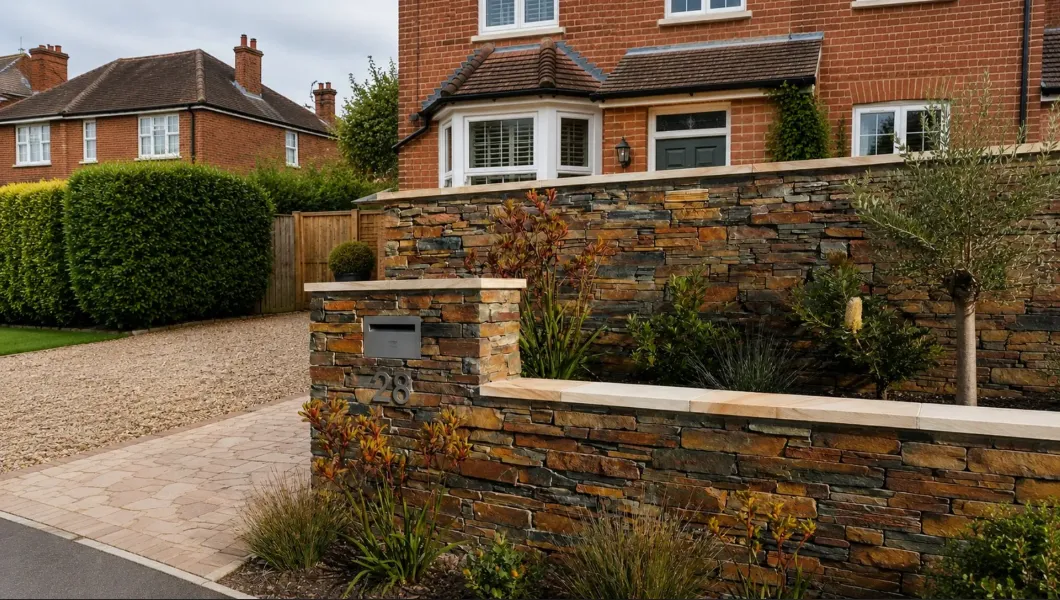
Natural stone cladding has become increasingly popular in residential, landscaping and commercial projects because it combines the visual depth of traditional masonry with the practicality of pre-assembled wall panels. Among the different formats available, stone cladding Z panels are particularly distinctive because their staggered shape helps create a more continuous stacked-stone appearance across the finished wall.
For homeowners, designers and contractors, colour is often the first major decision. Different natural stones can produce very different effects, ranging from warm rustic tones to cool contemporary greys and darker architectural finishes. The wider stone wall cladding market now includes a broad choice of colours, textures and panel systems for both exterior and interior applications.
Below are six popular stone cladding Z panel colours that work particularly well in modern UK wall-cladding projects.
1. Autumn Gold Stone Cladding Z Panels
Autumn Gold is one of the most recognisable natural stone cladding colours. It combines warm gold, brown, copper, rust and earthy mineral tones, creating a naturally varied finish rather than a uniform colour.
This type of stone wall cladding works especially well where the aim is to create warmth and character. It can complement red or brown brickwork, timber fencing, planted garden areas and traditional-style properties, while still working effectively as a contrast material on modern rendered buildings.
Where Autumn Gold Works Best
- Garden feature walls
- Entrance walls
- Boundary walls
- Outdoor kitchens
- Traditional brick properties
- Rustic and natural landscaping schemes
Because the individual pieces of stone vary naturally, an Autumn Gold Z panel wall tends to show considerable colour movement when viewed across a larger area. This is part of the character of genuine natural stone cladding.
2. Black Slate Stone Cladding Z Panels
Black Slate offers a very different appearance. Its charcoal, dark grey and black tones create a stronger, sharper architectural finish and are particularly suited to contemporary exterior design.
Dark stone wall cladding is frequently paired with white or light-grey render, anthracite window frames, dark fencing and modern paving. The contrast between the dark stone and lighter surrounding materials can make the cladding a focal feature rather than simply a background wall finish.
Popular Applications for Black Slate
- Modern house façades
- Entrance pillars and entrance walls
- Contemporary garden walls
- Commercial feature walls
- Courtyard walls
- Architectural landscaping features
The layered face of natural slate also produces shadow across the wall, so the finished appearance can change noticeably between direct sunlight, overcast conditions and evening lighting.
3. Oyster Golden Quartz Stone Cladding Z Panels
Oyster Golden Quartz sits between rustic and contemporary design. It typically combines cream, beige, gold, brown and warmer mineral tones, creating a lighter and more varied appearance than darker slate cladding.
This makes it a versatile choice for projects where the wall needs natural colour variation without becoming visually too dark. Oyster-style stone cladding is particularly effective alongside cream render, pale paving, timber and planted garden areas.
Why Oyster Golden Quartz Is Popular
- It introduces several natural colours within one wall.
- It can work with both traditional and contemporary buildings.
- The quartz surface provides strong natural texture.
- It pairs well with beige, cream, grey and brown landscaping materials.
- The Z panel format creates a layered stacked-stone effect.
For homeowners who want natural stone wall cladding with more warmth and variation than grey stone, Oyster Golden Quartz can provide a balanced alternative.
4. Blue Diamond and Nordic Stone Cladding Z Panels
Blue Diamond, sometimes presented within Nordic-style stone cladding ranges, introduces cooler blue-grey, silver-grey and darker mineral tones. It is particularly well suited to contemporary architecture where designers want a natural stone finish without the warmer gold and brown colours found in traditional walling stone.
Cool grey stone cladding works especially well alongside anthracite windows, grey porcelain paving, black metal detailing and white rendered walls.
Modern Design Combinations
- Blue-grey stone cladding with white render
- Nordic stone cladding with anthracite windows
- Grey Z panels with contemporary porcelain paving
- Natural stone cladding around modern entrances
- Cool-toned garden walls and courtyards
The combination of natural split stone faces and cooler colours gives Blue Diamond Z panels a contemporary appearance while retaining the irregularity that distinguishes real stone from manufactured wall finishes.
5. Multicolour Slate Stone Cladding Z Panels
Multicolour Slate is defined by natural variation. Instead of following one dominant colour, it can include combinations of grey, brown, charcoal, rust, buff and other mineral shades.
This makes each section of wall slightly different and creates a highly natural appearance when the panels are installed across a larger surface. It is particularly suitable for landscaping projects where the surrounding materials already contain several natural colours.
Where Multicolour Slate Can Be Effective
- Large garden walls
- Landscape retaining features
- Outdoor living areas
- Courtyards
- Traditional properties
- Projects combining stone, timber and planting
Multicolour stone cladding is also useful where a designer wants to avoid an overly uniform wall. The variation between individual pieces helps create a more organic appearance.
6. Yellow Gneiss Stone Cladding Z Panels
Yellow Gneiss brings together yellow, buff, grey and warm mineral tones. Compared with darker stone cladding, it creates a lighter and warmer wall surface while still providing the strong texture associated with natural stone Z panels.
This type of stone wall cladding can work particularly well on garden walls, property entrances and exterior features where a more traditional natural stone appearance is required.
Typical Design Uses
- Garden boundary walls
- House entrances
- Feature walls
- Landscape structures
- Traditional homes
- Projects using buff or cream paving
The combination of yellow and grey tones can also help connect warmer building materials with cooler contemporary landscaping products.
Why Stone Cladding Z Panels Are Popular
The popularity of stone cladding Z panels is not based on colour alone. The panel format itself has several practical and visual advantages compared with installing large numbers of individual stone slips.
- Natural stone appearance: the exposed face is made from genuine stone rather than a printed or moulded imitation.
- Layered texture: stones of different depths create shadow and three-dimensional character.
- Interlocking layout: the Z-shaped profile helps reduce obvious continuous vertical joints.
- Faster installation: several stone pieces are assembled into one panel rather than being installed individually.
- Wide design range: different stones provide warm, cool, light, dark and multicolour finishes.
Choosing Between Different Stone Cladding Systems
Colour is important, but it should not be the only consideration. Natural stone cladding panels can also be manufactured using different backing systems, and the correct system depends on the wall construction, panel weight, installation height and intended application.
Mesh-Backed Stone Cladding
Mesh-backed stone cladding uses a backing layer to help hold the individual natural stone pieces together as a panel. This format can be suitable for many wall-cladding applications where the substrate and fixing method are appropriate for the product.
Cement-Backed Stone Cladding
Cement-backed stone cladding uses a more rigid backing structure and can be considered for exterior applications where panel stability and the selected fixing system are important.
The backing system should therefore be selected according to the construction requirements of the wall rather than simply by appearance.
Where Is Stone Wall Cladding Being Used?
Modern stone wall cladding is no longer limited to traditional house façades. It is increasingly being used as an architectural accent material across a much wider range of residential and commercial projects.
- House façades and extensions
- Garden and boundary walls
- Entrance walls and pillars
- Outdoor kitchens
- Courtyards
- Fireplace and chimney features
- Commercial reception areas
- Restaurants and hospitality interiors
- Landscape walls and raised features
One reason for this wider use is that natural stone cladding can introduce genuine mineral variation into buildings that otherwise rely heavily on render, brick, glass or composite materials.
Current Stone Cladding Design Trends
Mixing Natural Stone with Render
Rather than covering an entire building, many projects use stone cladding selectively around entrances, lower wall sections, extensions or architectural features. This creates contrast while keeping the design visually controlled.
Using Darker Stone for Contemporary Architecture
Black Slate and other darker stone cladding colours work particularly well with modern grey and black architectural details. This makes dark Z panels a strong option for contemporary residential design.
Warmer Natural Colours in Landscaping
Autumn Gold, Oyster Golden Quartz and Yellow Gneiss are attractive where designers want a stronger connection between hard landscaping and planting. These colours can soften large wall surfaces and integrate them more naturally into garden environments.
Greater Use of Textured Feature Walls
Flat wall finishes remain common, but heavily textured natural stone is increasingly used to create focal areas. The uneven surface of stacked stone produces changing highlights and shadows throughout the day, giving the wall more visual depth than a uniform tile or rendered surface.
How to Choose the Right Stone Cladding Colour
The best stone cladding colour depends on the surrounding materials rather than on the stone alone. Before making a final decision, it is useful to consider the complete design.
- Brick colour: warm brick often works well with Autumn Gold, Oyster Golden Quartz or Yellow Gneiss.
- Render colour: white and pale grey render can provide strong contrast with Black Slate or Blue Diamond.
- Window frames: anthracite frames often complement grey, blue-grey and charcoal stone.
- Paving: the wall and paving do not need to match exactly, but their undertones should normally work together.
- Garden planting: warmer natural stone can integrate particularly well with dense planting and timber features.
- Scale: highly varied stone often becomes more visually balanced when viewed across a larger completed wall.
Natural Variation Is Part of the Material
Natural stone should not be expected to have the uniformity of porcelain, ceramic or manufactured concrete products. Variation in colour, mineral markings, texture and surface depth is part of its character.
This is especially important with products such as Autumn Gold, Oyster Golden Quartz and Multicolour Slate, where individual pieces can differ noticeably. A completed wall should therefore be judged as a whole rather than from one isolated stone piece.
Final Thoughts
Stone cladding Z panels provide a practical way to introduce genuine natural stone texture into modern wall design. The six colours discussed here demonstrate how widely the appearance can vary, from the warm tones of Autumn Gold and Yellow Gneiss to the cooler character of Blue Diamond and the dramatic finish of Black Slate.
For exterior walls, garden features, entrances and architectural accents, the most suitable stone cladding choice will usually depend on colour, texture, surrounding materials, substrate and installation requirements. A well-selected Z panel system can create a durable-looking, highly textured wall finish while retaining the natural variation that gives real stone its visual character.