Water can look completely clean and still contain microorganisms that cannot be seen with the naked eye. This is one reason water treatment involves more than checking whether water is clear, colourless and free from an unusual smell.
Ultraviolet disinfection provides a way to treat microbiological contamination without relying on chemicals. It is particularly relevant for private water supplies, rural properties and certain commercial applications where additional treatment may be required.
But what actually happens when water passes through a UV-C system? Understanding the process helps explain both its advantages and its limitations.
What is UV-C light?
Ultraviolet radiation sits beyond the visible part of the electromagnetic spectrum. It is divided into several bands, including UV-A, UV-B and UV-C.
UV-C occupies the shorter-wavelength part of this range and has properties that make it useful for disinfection. When microorganisms are exposed to an appropriate level of UV-C radiation, the energy can damage their genetic material. This prevents them from reproducing normally, effectively rendering them microbiologically inactive.
The principle is relatively straightforward: water flows through a treatment chamber, where it is exposed to UV-C radiation for a controlled period.
The effectiveness of the process depends on delivering an appropriate UV fluence, which is influenced by factors including radiation intensity, exposure time, water flow and water quality. The Drinking Water Inspectorate stresses that UV equipment must be properly specified and operated within its intended conditions.
What happens inside a UV treatment system?
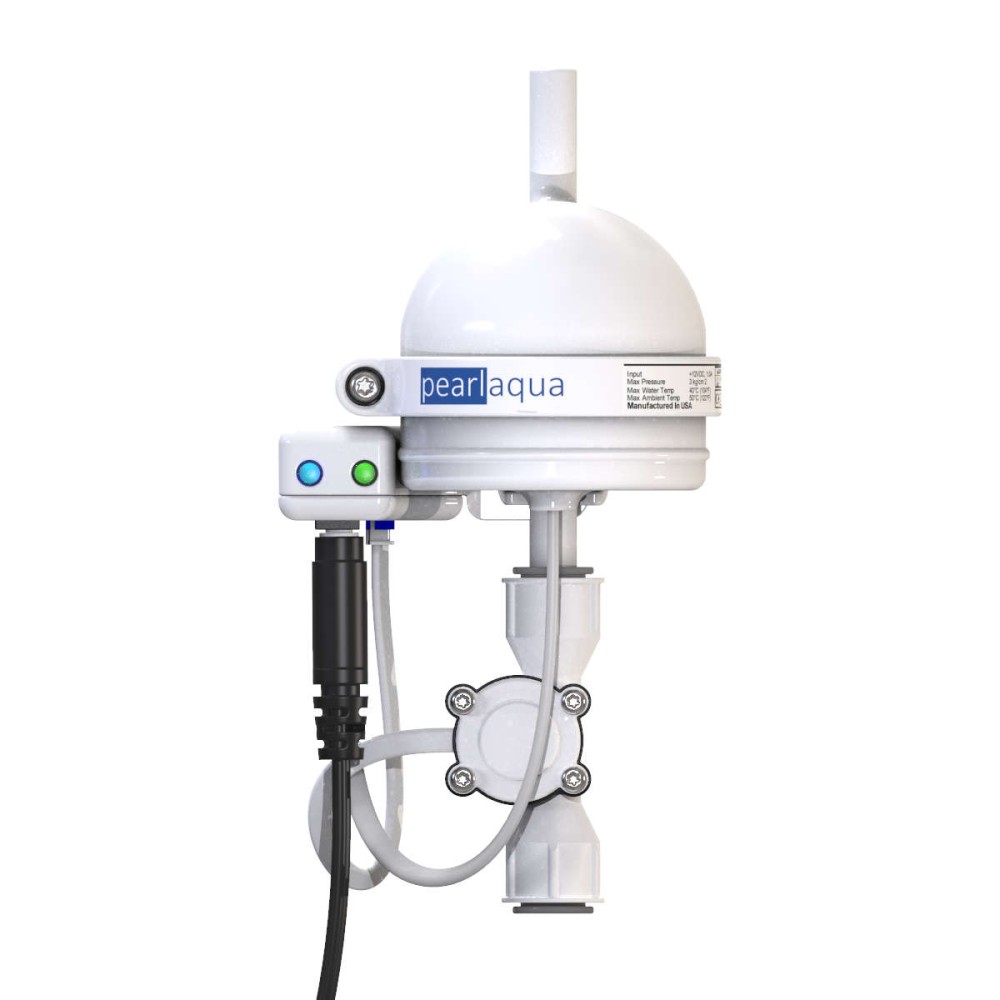
A typical UV treatment unit contains a chamber through which water flows. Inside that chamber is a UV light source positioned so that the passing water receives the required exposure.
As water moves through the chamber, UV-C radiation interacts with microorganisms suspended in it. The objective is to expose them to enough radiation to prevent them from continuing to reproduce.
This is a physical treatment process rather than a chemical one. Nothing needs to be added to the water for the UV stage itself to work.
However, simply putting a UV lamp next to flowing water is not enough. The design of the chamber, flow rate, UV output and water characteristics all influence the amount of radiation delivered.
This is why treatment systems should be selected according to the property’s requirements rather than based solely on the size or appearance of the unit.
Why does water quality matter?
One of the most important aspects of UV purification is the condition of the water entering the treatment chamber.
If water contains significant turbidity, suspended particles or substances that absorb UV radiation, the light may not pass through it as effectively. Particles can also provide microorganisms with some protection from exposure.
For this reason, UV treatment is often combined with pre-filtration. Depending on the source water, filtration or other treatment may be required before the water reaches the UV stage.
This is particularly relevant to private supplies. The Drinking Water Inspectorate recommends assessing water quality carefully before selecting UV equipment and highlights the importance of suitable pre-treatment where water characteristics could affect disinfection. A water test can therefore be a much better starting point than simply purchasing a UV unit and hoping it will address every water-quality problem.
UV-C LED systems versus traditional UV lamps
Traditional UV water-treatment systems commonly use low-pressure mercury lamps. UV-C LED technology uses semiconductor light-emitting diodes instead.
LED systems can offer some practical differences. UV-C LEDs can reach full operating intensity very quickly, making them suitable for applications where water flow is intermittent. They can also tolerate frequent power cycling without the same type of lamp-life concerns associated with conventional systems.
Modern LED designs can therefore be useful in domestic point-of-entry applications, point-of-use equipment and certain commercial installations.
Some systems also use power dynamically according to water flow, allowing the treatment output to be adjusted to the demand. The exact features depend on the equipment, so manufacturers’ specifications should always be checked before making comparisons.
The underlying principle remains the same: microorganisms need to receive sufficient UV-C exposure for effective disinfection.
Where can UV-C purification be used?
UV treatment can be particularly useful for properties that rely on private water sources.
Boreholes, wells and springs can have different microbiological characteristics from treated mains supplies. A property owner may therefore need additional treatment depending on the results of water testing and the risks associated with the source.
UV can also be incorporated into systems serving holiday accommodation, commercial premises, food-related businesses and other locations where a suitable water-disinfection process is required.
The size and design of the system must match the application. A unit intended for a single outlet may not be suitable for treating the entire supply to a property.
Flow rate is particularly important. If water passes through a UV reactor faster than its specified capacity, the exposure conditions can change and the required treatment performance may not be achieved.
What does UV-C purification remove?
This is where expectations need to be realistic.
UV-C treatment is primarily used to inactivate microorganisms. It does not work like a sediment filter, water softener or activated carbon filter.
It does not remove hardness minerals responsible for limescale, and it does not automatically eliminate metals, chemicals or other dissolved substances.
If a private supply contains several different contaminants, a multi-stage treatment system may be more appropriate. For example, filtration could be used to improve water clarity before the UV stage, while another treatment process could address a specific dissolved contaminant.
The order and combination of treatment stages should be determined by the characteristics of the water rather than by using a standard setup for every property.
Why maintenance should not be overlooked
UV treatment requires ongoing attention to remain effective.
With conventional systems, lamp output decreases with age, and manufacturers specify when lamps should be replaced. The protective sleeve can also accumulate deposits that reduce the amount of UV reaching the water.
LED systems have different maintenance characteristics, but they are not completely maintenance-free. The treatment chamber, monitoring equipment and other components still need to be maintained according to the manufacturer’s instructions.
Monitoring can provide an additional safeguard. Depending on the system, features may include UV-intensity monitoring, alarms or automatic water shut-off if the treatment unit is not operating correctly.
The Drinking Water Inspectorate recommends considering safeguards such as monitoring and automatic shut-off, particularly where failure of the UV system could otherwise result in untreated water continuing through the supply.
How to choose a UV-C system
Choosing a UV system should begin with four basic questions.
What is the water source?
Mains, borehole, spring and other supplies can have very different treatment requirements.
What does the water test show?
Testing can identify microbiological concerns as well as turbidity, colour, metals and other characteristics that may influence treatment.
How much water needs to be treated?
Consider the maximum likely flow rate rather than simply average daily consumption. A busy business may need substantially different equipment from a small household.
What happens if the system fails?
Monitoring, alarms and automatic shut-off can provide useful protection where continuous treatment is important.
For homeowners and businesses researching UV-C water purification, modern LED systems provide an alternative to conventional lamp technology, with applications ranging from point-of-use equipment to whole-property treatment. The appropriate system will depend on water quality, flow requirements and the intended application.
A useful tool within a wider treatment strategy
UV-C purification is based on a relatively simple principle, but effective implementation requires careful attention to the details. The radiation must reach the microorganisms at an appropriate intensity and for sufficient exposure, while water quality and flow must remain within the system’s operating parameters.
That is why UV should not be viewed as a universal answer to every water-quality issue. It is primarily a microbiological treatment method and may need to work alongside filtration or other treatment processes.
For a property with a suitable water source and an identified need for disinfection, however, UV-C can provide a practical chemical-free treatment stage. Start by testing the water, establish what needs to be treated and then choose equipment designed for those specific conditions.