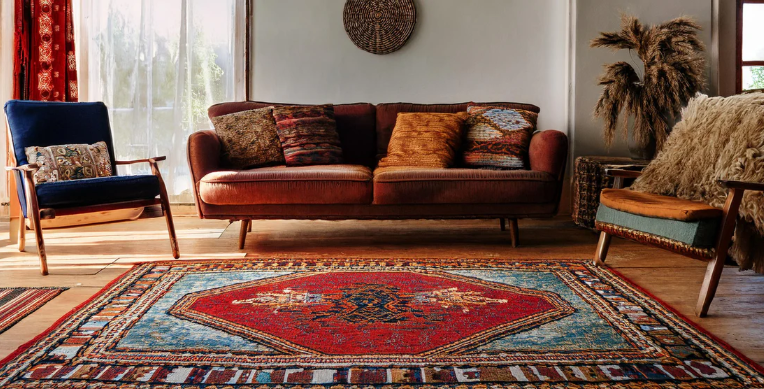
Handmade traditional rugs—especially those crafted in India—last significantly longer than machine-made alternatives, often appreciating in value over time. Their durability, cultural depth, and heirloom quality make them one of the smartest long-term investments you can make for your home.
Most home decor dates quickly. Furniture trends shift, paint colors go out of style, and that statement lamp you loved in 2019 probably feels dated now. A handmade traditional rug is different. It gets better with age—and in many cases, more valuable.
Whether you’re furnishing a new space or looking to buy rugs that stand the test of time, understanding what makes handmade rugs worth their price tag is the first step. This post breaks down exactly that: the craftsmanship behind them, their cultural weight, their financial upside, and how to shop for one wisely.
How the Hand-Knotting Process Creates Rugs That Last
The durability of a handmade rug starts with how it’s made. In traditional hand-knotting, each knot is individually tied around the warp threads—a process that can take months or even years for a single rug, depending on its size and complexity.
This technique creates a dense, interlocked structure that holds up under decades of foot traffic. Machine-made rugs, by contrast, use tufting guns or looms that glue or loop yarn into a backing material. That backing degrades. The fibers loosen. Within five to ten years, most machine-made rugs look tired.
A quality handmade traditional rug? It can last 50 to 100 years with basic maintenance.
What materials make handmade rugs more durable?
The most durable handmade rugs use natural fibers—wool, silk, or a blend of both. Wool is naturally resilient: its fibers bend without breaking and resist staining due to a waxy outer coating called lanolin. Silk adds strength and sheen, particularly in fine detail work.
Natural dyes, derived from plants and minerals, also hold color better than synthetic alternatives over long periods. A rug made with quality natural materials will look richer at 30 years old than a synthetic rug does at five.
What Makes a Traditional Rug Artistically and Culturally Significant?
Handmade rugs are not just floor coverings—they’re records of culture. Different regions produce distinctly different patterns, with motifs that carry meaning passed down through generations.
Persian rugs feature intricate floral designs and medallion patterns. Turkish kilims use bold geometric shapes tied to tribal identity. Indian rugs from regions like Bhadohi—South Asia’s largest hub of hand-knotted carpet weaving—often blend Mughal-era artistry with regional influences, producing work that is both traditional and highly detailed.
Because each rug is made by hand, no two are identical. Slight variations in knotting density, color, and pattern are part of what gives each traditional rug its character. You’re not buying a product off an assembly line. You’re buying something made by a person, expressing a tradition.
Do Handmade Rugs Actually Appreciate in Value?
Yes—though not all of them, and not automatically. The rugs most likely to appreciate in value share a few qualities: fine materials, high knot density, reputable origin, and good condition.
Antique and semi-antique handmade rugs regularly sell at auction for multiples of their original price. Collectors and interior designers treat them as art, not furniture. Even newer handmade rugs, if well-made and properly maintained, hold their resale value far better than machine-made alternatives.
Compare that to a mass-produced rug from a big-box retailer: once it’s been used, it has essentially no resale value. A handmade rug can be passed down. It becomes an heirloom—something with both financial and emotional worth.
How to Buy Rugs: What to Look for When Shopping
Buying a handmade rug is different from buying most home goods. Here’s what to check before committing.
How can you tell if a rug is genuinely handmade?
Turn the rug over. On a hand-knotted rug, the pattern appears almost as clearly on the back as it does on the front, because each knot goes through the foundation. On a machine-made or tufted rug, the back will show a canvas or latex backing that hides the construction.
Also check the knot count. Higher knots per square inch (KPSI) generally indicate finer craftsmanship and greater durability. A rug with 100–200 KPSI is good quality; fine rugs can exceed 300 KPSI.
Why does buying from a reputable seller matter?
Reputable sellers provide transparency about materials, origin, and weaving method. They can tell you whether the dyes are natural or synthetic, where the rug was made, and what fibers were used.
For example, The Ambiente—a design-led rug atelier rooted in Bhadohi with a flagship store in New Delhi—works directly with over 4,000 artisan weavers and is backed by 30+ years of manufacturing experience through its parent company, Bhadohi Carpets. That kind of direct sourcing gives buyers confidence in what they’re purchasing. When you buy rugs from a seller with deep supply chain knowledge, you’re far less likely to end up with a machine-made rug sold as handmade.
What materials and dyes should you prioritize?
Wool and silk remain the gold standard. Avoid rugs made primarily with viscose (also called art silk or bamboo silk)—it looks like silk but wears poorly. For dyes, ask whether the rug uses vegetable or chrome dyes. Both are more stable than synthetic options, though natural vegetable dyes offer the richest aging characteristics.
Why Handmade Rugs in India Are a Benchmark for Quality
Handmade rugs in India have a history stretching back to the Mughal Empire in the 16th century, when Persian weavers were brought to the subcontinent to establish court workshops. The craft took root, evolved, and spread across regions like Kashmir, Jaipur, Agra, and Bhadohi.
Today, Bhadohi remains one of the most important centers of hand-knotted carpet production in the world. The combination of skilled artisans, access to high-quality wool, and deep generational expertise makes handmade rugs in India a strong benchmark for quality at a range of price points.
How do handmade rugs in India support artisan communities?
Indian rug production is heavily artisan-driven. In Bhadohi alone, hundreds of thousands of weavers—many of them women—rely on the carpet industry for their livelihoods. Brands like The Ambiente actively support these communities: 4,000 of their weavers are women, and the brand focuses on fair wages and sustainable production practices.
When you buy a handmade rug from an ethically sourced Indian producer, you’re not just making a home purchase. You’re supporting a skill set that has been refined over centuries.
The Environmental Case for Handmade Traditional Rugs
Natural fibers are biodegradable. Traditional dyes involve fewer harsh chemicals than synthetic alternatives. And because handmade rugs last so long, they don’t end up in landfills every five years the way fast-furnishing products do.
The environmental math is straightforward: one quality handmade rug that lasts 50 years has a fraction of the environmental impact of ten machine-made rugs over the same period. Longevity is sustainability.
The Long Game: Why a Traditional Rug Is Worth the Investment
A handmade traditional rug gives you things most home decor simply can’t. It gives you durability that outlasts trends. It gives you a piece of cultural history. It holds—and often grows—in financial value. And it tells a story that a printed-polyester runner never could.
If you’re looking to buy rugs that will still look good in 20 years—and potentially be worth more—start with the materials, verify the craftsmanship, and choose sellers who can account for every step of the process. Stores like The Ambiente make that due diligence easier, combining generational expertise with transparent sourcing.
The best rugs don’t just cover your floor. They anchor a room for decades.
Frequently Asked Questions
How long does a handmade traditional rug typically last?
A well-made hand-knotted rug using quality natural fibers can last 50 to 100 years with proper care. This is significantly longer than machine-made rugs, which typically show wear within 5 to 10 years.
Do handmade rugs increase in value over time?
Many do, particularly those made with fine materials, high knot density, and traditional craftsmanship from reputable origins. Antique and semi-antique handmade rugs regularly sell at auction for well above their original price. Not every rug appreciates, but quality handmade pieces hold their value far better than mass-produced alternatives.
What should I look for when I buy rugs that are handmade?
Check the back of the rug—if the pattern is clearly visible on the reverse, it’s likely hand-knotted. Ask about materials (wool and silk are preferred), dye type (natural or chrome dyes are more stable), and knot density. Buying from a transparent, reputable seller also reduces the risk of purchasing a machine-made rug marketed as handmade.
Why are handmade rugs in India considered high quality?
India has centuries of carpet-weaving history, with regions like Bhadohi, Kashmir, and Agra recognized globally for their craftsmanship. The combination of skilled artisan knowledge passed through generations, access to quality raw materials, and established weaving traditions makes handmade rugs in India a reliable standard for quality at various price points.
Are handmade rugs a sustainable choice?
Yes. Natural fibers like wool and silk are biodegradable, traditional dyes involve fewer harsh chemicals than synthetic options, and the longevity of handmade rugs means far less waste over time compared to fast-furnishing alternatives.
What is a traditional rug made from?
Most traditional rugs are made from wool, silk, or a wool-silk blend. Wool provides durability and natural stain resistance, while silk adds fineness and sheen. The best traditional rugs use natural or vegetable dyes, which hold color richly over decades.