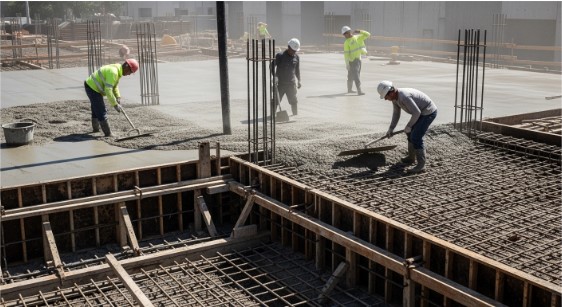
Commercial construction projects demand materials that offer strength, durability, and long-term reliability. From retail spaces and office buildings to warehouses and industrial facilities, the structural foundation determines how well a property performs over time. Among all construction materials, concrete remains one of the most critical components due to its versatility and ability to withstand heavy loads and environmental stress.
As commercial projects continue to grow in scale and complexity, the quality of concrete work plays an increasingly important role in safety, compliance, and cost efficiency.
Why Concrete Is Essential for Commercial Structures
Concrete is widely used in commercial construction because it offers several advantages that other materials struggle to match. It provides exceptional compressive strength, making it ideal for foundations, slabs, and load-bearing elements. Additionally, concrete structures are resistant to fire, moisture, and pests, which helps reduce long-term maintenance costs.
Another key benefit is adaptability. Concrete can be poured and shaped to meet specific design requirements, whether for flat pads, reinforced foundations, or custom structural elements. This flexibility makes it suitable for a wide range of commercial applications.
Understanding Commercial Concrete Applications
Commercial concrete is not a one-size-fits-all solution. Different projects require different approaches depending on the building’s purpose, soil conditions, and load requirements. Common applications include:
- Building foundations for offices and retail spaces
- Concrete pads for equipment and parking areas
- Structural slabs for warehouses and industrial units
- Reinforced concrete for high-traffic commercial environments
Each application requires careful planning, accurate measurements, and proper reinforcement to ensure structural integrity.
The Importance of Professional Concrete Pouring
Concrete work in commercial settings involves far more than mixing and pouring material. It requires precise timing, experienced handling, and adherence to engineering specifications. Improper pouring techniques can lead to cracking, uneven surfaces, or long-term structural weaknesses.
Professional teams understand how temperature, moisture levels, and curing time affect the final result. They also ensure compliance with local building codes and safety regulations—an essential factor for commercial property owners and developers.
Choosing experienced professionals for commercial concrete pouring helps ensure that the structure performs as intended and avoids costly repairs in the future.
Why Site Preparation and Planning Matter
Before any concrete is poured, thorough site preparation is essential. This includes soil testing, grading, and ensuring proper drainage. Poor preparation can compromise even the highest-quality concrete.
Planning also involves determining reinforcement needs, such as rebar or mesh, to enhance strength and durability. These steps may not be visible once the project is complete, but they play a crucial role in the building’s long-term performance.
Durability and Long-Term Cost Benefits
One of the main reasons developers choose concrete for commercial projects is its long lifespan. When installed correctly, concrete structures can last decades with minimal maintenance. This durability translates into long-term cost savings by reducing repair, replacement, and downtime expenses.
Concrete also performs well under heavy usage, making it ideal for commercial environments with high foot traffic, vehicle movement, or machinery.
Sustainability in Modern Commercial Construction
Sustainability has become an important consideration in commercial construction. Modern concrete solutions increasingly incorporate eco-friendly practices, such as optimized mix designs and reduced material waste.
Concrete’s thermal mass can also contribute to energy efficiency by helping regulate indoor temperatures, making it a practical choice for environmentally conscious developments.
Choosing the Right Contractor for Commercial Projects
Selecting the right contractor is one of the most important decisions in any commercial construction project. Experience, technical knowledge, and attention to detail all contribute to successful outcomes.
A reliable contractor ensures that concrete work is completed on schedule, within budget, and according to specifications while meeting safety and compliance standards.
Final Thoughts
Concrete remains a cornerstone of commercial construction due to its strength, versatility, and long-term value. From foundations to structural elements, properly executed concrete work supports the safety and functionality of commercial buildings.
By prioritizing professional planning, preparation, and execution, developers can ensure their projects stand the test of time and meet modern construction standards.